Discounts for Google Reviews: Legal, but Is It Allowed?
By Eric Hinderager, owner of Review Monster · Updated
Are discounts for Google reviews legal? Learn what the FTC rule allows, why Google bans every review incentive, and how to ask for reviews the right way.

Discounts for Google reviews aren't always illegal under US federal law. But Google bans them outright. Reviews tied to a reward can be removed, and your profile can be restricted.
The FTC only objects when the reward depends on a positive or negative review, or when it's kept quiet. Google bans the reward no matter what the review says.
So the legal question and the Google question have two different answers. If your business lives or dies by its Google Business Profile, the Google answer is the one that counts.
It's a tempting idea, though. You finish a job and the customer's happy. A little off their next visit feels like a fair thank-you for a few minutes of their time. Here's why that thank-you causes more trouble than it's worth, and what to do instead.
What the FTC rule says about rewards
The FTC's Consumer Reviews and Testimonials Rule took effect on October 21, 2024. The key part, 16 CFR § 465.4, is short. A business can't pay or reward people for reviews that say a certain thing, good or bad.
A reward that only goes with positive reviews is the clearest example. The rule covers consumer reviews on Google and other sites, not just the ones on your own web page.
Notice what's missing. The FTC says the rule doesn't ban incentivized reviews outright. They're allowed as long as nobody is told, or led to think, that the review has to be positive or negative.
That implied part catches a lot of people. You can't hint that the reward depends on a good review, even if you never say it. A note like "Loved your oil change? Leave us a review and the next one's on us" starts to look like a condition.
A few more things the FTC points out:
- If you don't tell readers about a reward, that can still break the FTC Act, even when the reward itself is allowed.
- Even with a clear notice, incentivized reviews can still mislead people if they push your star rating up compared with reviews nobody was paid for.
- The same rule also covers fake consumer reviews.
The penalties are real. Courts can fine companies that break the rule on purpose, and the FTC raises the top fine each year for inflation. The agency has already sent warning letters to companies under the new rule.
We're not lawyers. If you're set on running any kind of reward program, ask one first.
Why Google policy bans review discounts
Even if your offer would pass the FTC test, Google's rules are stricter. Google's Business Profile help page says free or discounted goods or services in exchange for reviews count as fake and misleading content. They're flatly banned. The same goes for a reward to change or remove a negative review.
The star rating doesn't matter here. A discount for an honest three-star review breaks the rules just as much as one for five stars. Google's Maps content policy also bans reviews that were paid for directly or "in kind." In kind covers the free haircut and the cheaper service call.
The FTC itself notes that many sites ban rewards that federal law would allow. Google is one of them, and Google policy is what decides whether your reviews stay up.
The same logic covers loyalty cards. Google bans stamps, points or punches earned by leaving a review, since that's still a reward for one.
So what can Google actually do? Its Business Profile restrictions page says it can:
- Block your profile from getting new reviews for a set period
- Take down your existing reviews for a set period
- Show customers a warning on your profile that fake reviews were removed
The page doesn't say how long that set period is. It does say Google will email you before a restriction starts, and that you can appeal. At the far end, Google's content policy says it can suspend or close the account.
Think about that warning for a second. For a plumber or a roofer, the profile is often the first thing a new customer sees. A notice like that hurts your reputation online in a way no discount can make up for.
Are prize drawings any different?
Not really. Putting everyone who leaves a review into a monthly gift card drawing is still a reward. Under the FTC rule it can be legal if it's open to any review, good or bad, and you say so up front. On Google it's still a reward for a review, so it's out.
Some owners ask if they can offer incentive points instead of a prize. It's the same answer. If the reward only comes after a review, Google treats it as paid.
Yelp is stricter than both. Yelp's rules for business owners say don't offer freebies, discounts or payment for reviews. They also say don't ask anyone to write a Yelp review at all, and that includes your customers.
How to send review requests to all customers
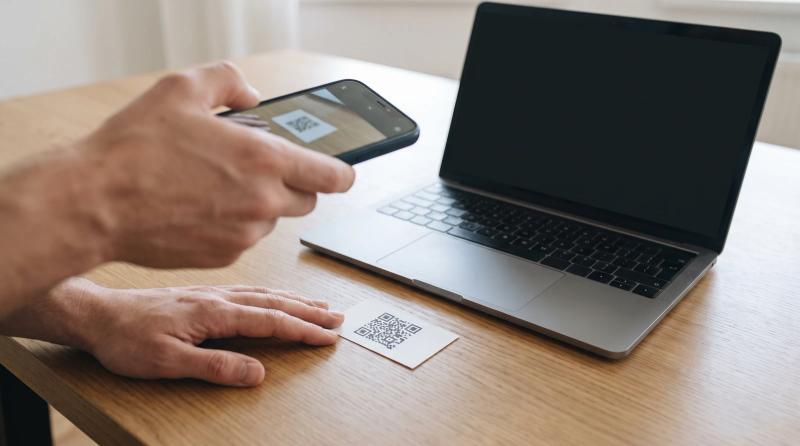
Asking is fine. Google's content policy lets a business ask for real reviews as long as no reward is attached. Google's own tips for getting more reviews suggest sending customers a review link or a QR code.
The catch is who you ask. Google bans review gating. That means you can't pick only happy customers to ask, or steer unhappy ones away from posting. That rule dates to an April 2018 guideline update, as local SEO expert Joy Hawkins reported. The FTC says gating isn't named in its rule, but it could still break the FTC Act.
So ask everybody. The salon regular who's been coming in for years gets the same request as the one-time customer who seemed a little quiet at checkout. Same ask, every customer, no strings.
Good review requests have a few things in common:
- They go out soon after the job, while it's fresh.
- They use the same plain words for everyone.
- They point straight to the review page, with a simple design and no extra steps.
- They say nothing about a reward, a perk or a star rating.
A steady flow of honest online reviews looks more natural than a sudden burst of five-star posts. Readers notice when every post sounds the same, and real online reviews give them a truer picture.
Put your review link in front of customers
Your review link should be easy to find. Add it to your follow-up text, your email footer and your invoices. A small card at the counter with a QR code works too.
Your web design matters here. A clear button on your web page that says "Leave us a review" does more than a link buried in the footer. Keep the design plain so it works well on a phone.
Whatever the design, the words should stay neutral. "Tell us how we did" is fine. "Tell us how much you loved it" leans toward positive reviews and starts to look like gating.
Tip: Ask while the job is still fresh. A text with your review link sent the same day is a lot easier for someone to act on than a reminder weeks later.
If you already offered a discount
Stop the offer first. Take down the sign at the counter, cut the line from your follow-up emails and make sure your staff knows it's over.
Then switch to a plain ask: your review link, sent to everyone, with nothing attached. If you want to thank people, thank them for their business. A loyalty perk everyone gets, whether they review or not, isn't tied to a review at all.
If Google emails you about a restriction, read it closely. Confirm the reward is gone, and use the appeal option if you think the action was a mistake. Whatever you do, don't try to replace removed reviews with new paid ones.
The short version? The law leaves you a little room. Google leaves you none. Ask everyone for an honest review, make it easy to leave one, and let positive feedback come in on its own. If you'd rather not send review requests by hand, Review Automation from Review Monster does that job in the background for your business. Take a look at reviewmonster.com whenever you're ready.
Frequently asked questions
Can you give discounts for Google reviews?
Not on Google. Google bans any reward for a review, even an honest one. US law may allow some rewards, but Google can still remove the reviews and restrict your profile.
Does Google give rewards to people who post?
Google's Local Guides program gives points and badges to people who post on Maps. The company you write about doesn't pay you, and it shouldn't.
Can businesses remove bad ratings on Google?
Not on their own. A business can flag a review that breaks Google's rules, and Google decides whether it comes down. You also can't reward someone to take a negative one down.
Is Google or Yelp better for leaving feedback?
Related reading: What to Say When Asking for a Google Review (Templates) and How to Get More Google Reviews (Without Breaking Rules).
Both matter, but they work in different ways. Google lets you ask every customer for an honest post, positive or not. Yelp asks owners not to ask at all, so your requests will usually point to Google.
Sources
- The Consumer Reviews and Testimonials Rule: Questions and Answers — Federal Trade Commission
- 16 CFR § 465.4 - Buying positive or negative consumer reviews — Cornell Law School Legal Information Institute (text of the Code of Federal Regulations)
- FTC's Endorsement Guides: What People Are Asking — Federal Trade Commission
- FTC Publishes Inflation-Adjusted Civil Penalty Amounts for 2025 — Federal Trade Commission
- FTC Warns 10 Companies About Possible Violations of the Agency's New Consumer Review Rule — Federal Trade Commission
- Tips to get more reviews — Google Business Profile Help
- Prohibited & restricted content - Maps User Generated Content Policy Help — Google Maps User Generated Content Policy Help
- Business Profile restrictions for policy violations — Google Business Profile Help
- The DOs and DON'Ts of Yelp for Business Owners — Yelp for Business Support Center
- Review Gating Is Now Against the Google My Business Guidelines — Sterling Sky, Joy Hawkins
Want help with review automation?
Review Monster runs your review requests, listings and website in the background, so you can stay on the job.