How to Get More Google Reviews (Without Breaking Rules)
How to get more Google reviews from your customers: where to find your review link, when and how to ask, and the mistakes that can get reviews removed.
The way to get more Google reviews is to ask every customer for one, every time, and give them a direct link so it takes them a few seconds. Google gives you that link and a QR code for free, and most people who get asked will actually leave a review.
That's the short answer. The rest of this post covers where to find the link, when to ask, what to say, what Google and the FTC don't allow, and what to do when the reviews still aren't coming.
You probably have more happy customers than unhappy ones. The trouble is that happy customers go home and get on with their day. The unhappy one sits down that night and writes a paragraph.
So if you wait for reviews to show up by themselves, your profile tends to fill up with the people who had something to complain about. Asking fixes that.
Why asking works better than waiting
Most people don't think to leave a review, but they'll do it if you ask. In BrightLocal's 2026 consumer survey, 83% of people who were asked to leave a review went on to leave one.
That's the whole case for asking. You aren't talking anyone into anything. You're reminding people who were already happy.
It matters for more than looks, too. Google's own help page says more reviews and positive ratings can help your business's local ranking. Nobody outside Google knows exactly how much, and anyone who promises you a ranking is guessing.
What local SEO experts do agree on is the general shape of it. Whitespark's 2026 Local Search Ranking Factors survey ranks a high Google rating, the number of Google reviews with text, how recent they are, and a steady flow of reviews over time among the top review factors for the map pack.
Interestingly, the same survey puts keywords inside reviews way down the list, at #36. So don't bother coaching customers to mention "best plumber" in their review. Just get more of them, and keep them coming.
Customers care about fresh reviews as much as Google does. BrightLocal found that 74% of consumers look for reviews written in the last three months. A pile of glowing reviews from a few years ago doesn't do much for someone deciding who to call today.
How to get more Google reviews from customers, step by step
Here's the simple version that works for most local businesses, whether you run a salon, an auto shop or a roofing crew.
Get your review link and QR code
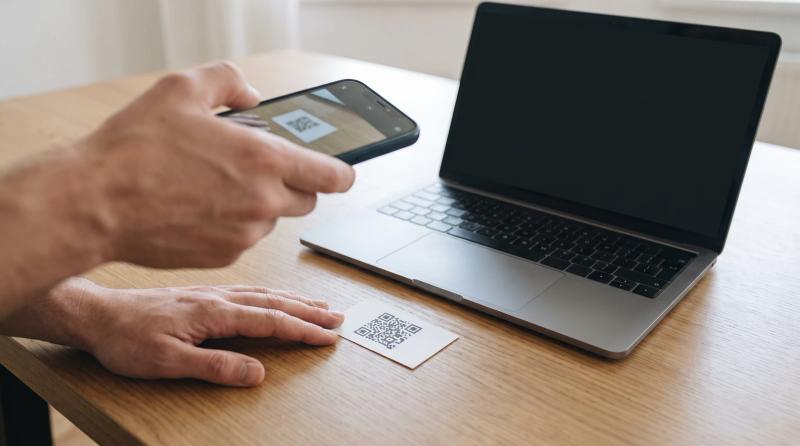
Google's recommended way to ask is to send customers to a Google review link or have them scan a QR code. You don't need any special software to get either one.
Google's instructions say to open your Business Profile, choose Read reviews, then Get more reviews. From there you can copy the link or grab the QR code.
One catch: the QR code can only be generated in a computer browser, not on a phone. If you're poking around on your phone and can't find it, that's probably why.
Google also changes its menus from time to time, so the labels might not match exactly. If you can't find the option, make sure you're signed in with the Google account that manages your profile and look around the reviews section.
Test the link yourself before you send it to anyone. It should open the review box, not a search results page.
Ask at the right moment
The best time to ask is right when the customer feels good about what you did. That moment looks different depending on the business:
- A plumber can ask as the job wraps up and the leak is fixed, or send the link by text that afternoon.
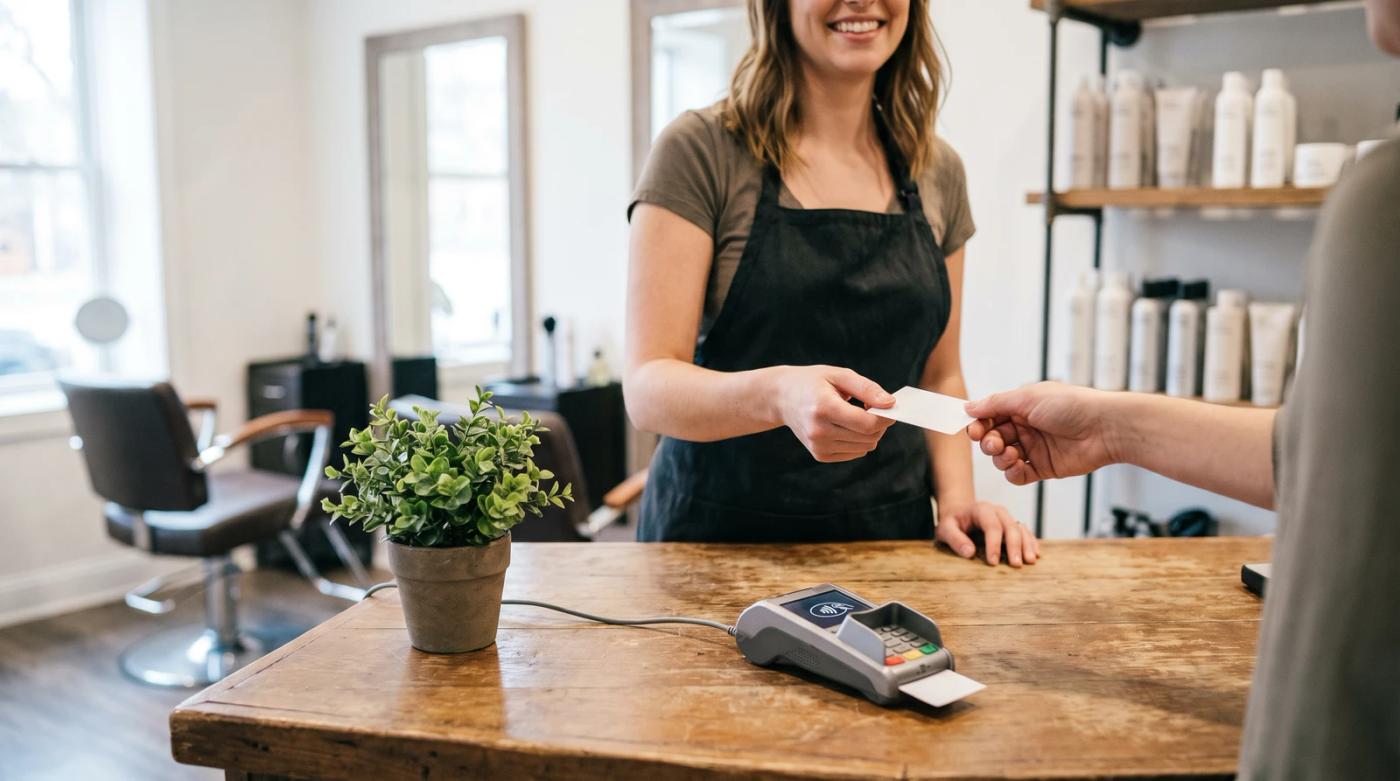
- A salon can ask at checkout, while the client is looking at their hair in the mirror.
- A roofer on a long job should wait until the work is done and the yard's cleaned up, not ask on day one.
- A restaurant can put the QR code on the receipt or the table, so people can do it while they're still sitting there.
If you wait a week, the experience has faded and your request is just another message in a pile.
Put the link where customers already are
Google itself suggests putting the link or QR code on receipts, in thank-you emails, at the end of chats, or on display in your store.
That list covers most businesses. A counter sign works for walk-in shops. A line in your invoice email works for service businesses. If you use a chat widget on your website, the end of a good conversation is a natural place to drop it.
Keep the ask short and personal
You don't need a script. Something like this is plenty:
Thanks for having us out today. If you've got a minute, a quick Google review really helps other people find us. Here's the link.
Use the customer's name if you have it. Sign it from a real person. Don't tell them what to write, and don't ask for five stars. Just ask for an honest review.
Follow up once, then let it go
Plenty of people mean to leave a review and forget. One friendly reminder a few days later catches a lot of them.
More than one starts to feel like nagging, and that can sour a good experience. If you're sending requests by text or email, make sure you have the customer's permission to contact them that way. The rules there vary, so it's worth checking what applies to your business.
Reply to the reviews you get
Google encourages this too. Its ranking help page says positive reviews and helpful replies can help your business stand out.
Customers have started expecting it faster, too. BrightLocal found that 19% of consumers expect a reply the same day they post a review, up from 6% the year before.
A short, specific thank-you is fine. It shows the next person reading that someone's actually paying attention.
What Google and the FTC won't let you do
This is the part people skip, and it's the part that can cost you. There are a handful of shortcuts that look harmless and aren't.
No incentives for reviews
Google is blunt about this. Offering free or discounted goods or services in exchange for customers to post, change or remove reviews is strictly prohibited.
That means no "10% off your next visit for a review," no gift card drawing for reviewers, no free add-on. Even if the customer would've written the same thing anyway.
You might hear that the FTC allows some incentives. That's true as far as it goes: the FTC says its rule doesn't prohibit incentives as long as there's no requirement to express a particular sentiment. But Google bans all review incentives, so on Google they're still off the table.
No review gating
Review gating is when you only send happy customers to Google and steer everyone else somewhere private. A common version is a quick survey first: thumbs up goes to the Google link, thumbs down goes to a feedback form.
Google's content policy bans businesses that discourage or prohibit negative reviews, or selectively solicit positive reviews from customers. Sterling Sky noted that Google added that anti-gating language to its guidelines on April 12, 2018, so this isn't new.
Heads up: Sterling Sky documented a business that lost all of its Google reviews over review gating. Its rankings were cut in half overnight and never fully recovered. If a tool you use filters customers by how happy they are before showing the Google link, turn that off.
The FTC's rule doesn't specifically ban gating, but the FTC says the practice could still violate the FTC Act. Easier to just ask everyone.
It's fine to want to hear about problems privately. Just don't make that the price of getting the Google link. Ask everyone the same way.
No reviews from employees, and no quotas
Reviews on Google Maps must reflect a genuine experience. Google doesn't allow reviews from people with a conflict of interest, which can include current or former employment, a contractual or consulting relationship, or other professional or personal affiliations.
So your staff, your family, your business partner and your buddy who owns the shop next door shouldn't be leaving you reviews.
Google also restricts merchants requesting that staff solicit a certain number of reviews, or reviews with specific content, like naming a particular employee. Encouraging your team to ask is great. Setting a review quota or a "mention my name" contest crosses the line.
The FTC's fake review rule
The FTC announced its final rule banning fake reviews and testimonials on August 14, 2024. Among other things, it bans incentives conditioned on writing a review that expresses a particular sentiment.
The rule went into effect on October 21, 2024, and courts can impose civil penalties for knowing violations.
Here's the reassuring part. The FTC says the rule exempts generalized requests asking purchasers to post reviews about their experiences. Asking all your customers for an honest review is exactly what it's okay to do.
Why you're still not getting more Google reviews
If you've been asking and the reviews are still trickling in, it's usually one of a few things.
You're asking some customers, not all of them. When things are busy, asking is the first thing that slips. It's also hard to ask the customer who seemed a little grumpy, so people skip them, which drifts toward gating without meaning to. The fix is making the ask part of how every job or visit ends.
The link is clunky. If customers land on a search page and have to find your business and then the review button, a lot of them give up. Use Google's direct review link.
You're asking too late. A request that shows up long after the job feels random. Ask the same day if you can.
You're sending everything in one burst. It's tempting to blast your whole customer list once and call it done. Whitespark's experts specifically rank a sustained influx of reviews over time, rather than bursts, as one of the stronger review signals. A steady drip of requests after every job beats one big push.
Your business is a little more private. A dentist, a therapist or a lawyer can't exactly shout across the waiting room asking for reviews. A general request sent to every patient or client after a visit still works fine. Be careful in your replies, though, and don't confirm details about someone's care or case. Check what your industry's privacy rules allow before you respond.
You tried the shortcuts. If you've searched how to get more Google reviews on Reddit, you've probably seen people suggest review swaps with other owners, review groups, or paid review services. Those all fall into the conflict of interest or fake review buckets above. They're the fastest way to lose the reviews you earned honestly.
Your rating is holding people back. BrightLocal found that 31% of consumers will only use a business rated 4.5 stars or higher. If you're under that, the answer isn't hiding the unhappy customers. It's fixing what they're unhappy about, replying calmly, and asking everyone else so the honest picture fills in.
Keep it boring and keep it going
Getting more Google reviews isn't a trick. It's a habit: ask everyone, make it easy with Google's link, ask while the experience is fresh, reply to what comes in, and stay away from incentives, gating and employee reviews.
The hard part is doing it after every single job, especially on the busy weeks. That's why Review Monster exists: so the asking still happens when the day gets away from you.
Yes, we'd love to help you, but honestly, a printed QR code and a habit of asking will get you a long way on your own. If you'd rather have the text and email requests go out automatically after every job, take a look at reviewmonster.com.
Sources
- Local Consumer Review Survey 2026 — BrightLocal, Rosie Murphy
- Tips to improve your local ranking on Google — Google Business Profile Help
- 2026 Local Search Ranking Factors Report — Whitespark, Darren Shaw
- Tips to get more reviews - Google Business Profile Help — Google Business Profile Help
- Create a Google link or QR code to request reviews — Google Business Profile Help
- The Consumer Reviews and Testimonials Rule: Questions and Answers — Federal Trade Commission
- Prohibited & restricted content - Maps User Generated Content Policy Help — Google Maps User Contributed Content Policy Help
- Google Review Gating Is Against Google Maps User Generated Content Policy — Sterling Sky, Joy Hawkins
- The Local SEO Mistake That Cost a Business ALL Their Reviews — Sterling Sky, Joy Hawkins
- Federal Trade Commission Announces Final Rule Banning Fake Reviews and Testimonials — Federal Trade Commission
Want help with review automation?
Review Monster runs your review requests, listings and website in the background, so you can stay on the job.