In this article, you'll learn how to use the Aging invoices report to keep an eye on money you're still owed. It lists every invoice with a balance, groups them by how late they are, and puts the oldest at the top. That way you know who to follow up with first.
To open the Aging invoices report:
- In the menu, click Reports.
- Under Business reports, click Aging invoices.
The report works the same on the web and in the phone app. In the app, tap Reports and then Aging invoices under Business reports. You get the same tiles and the same list, laid out for a phone screen.
Understanding the Aging invoices report
The report always shows things as they stand today, so there's no date range to pick. Every invoice with money still owed on it shows up here, however old it is. Voided and deleted invoices are left out.
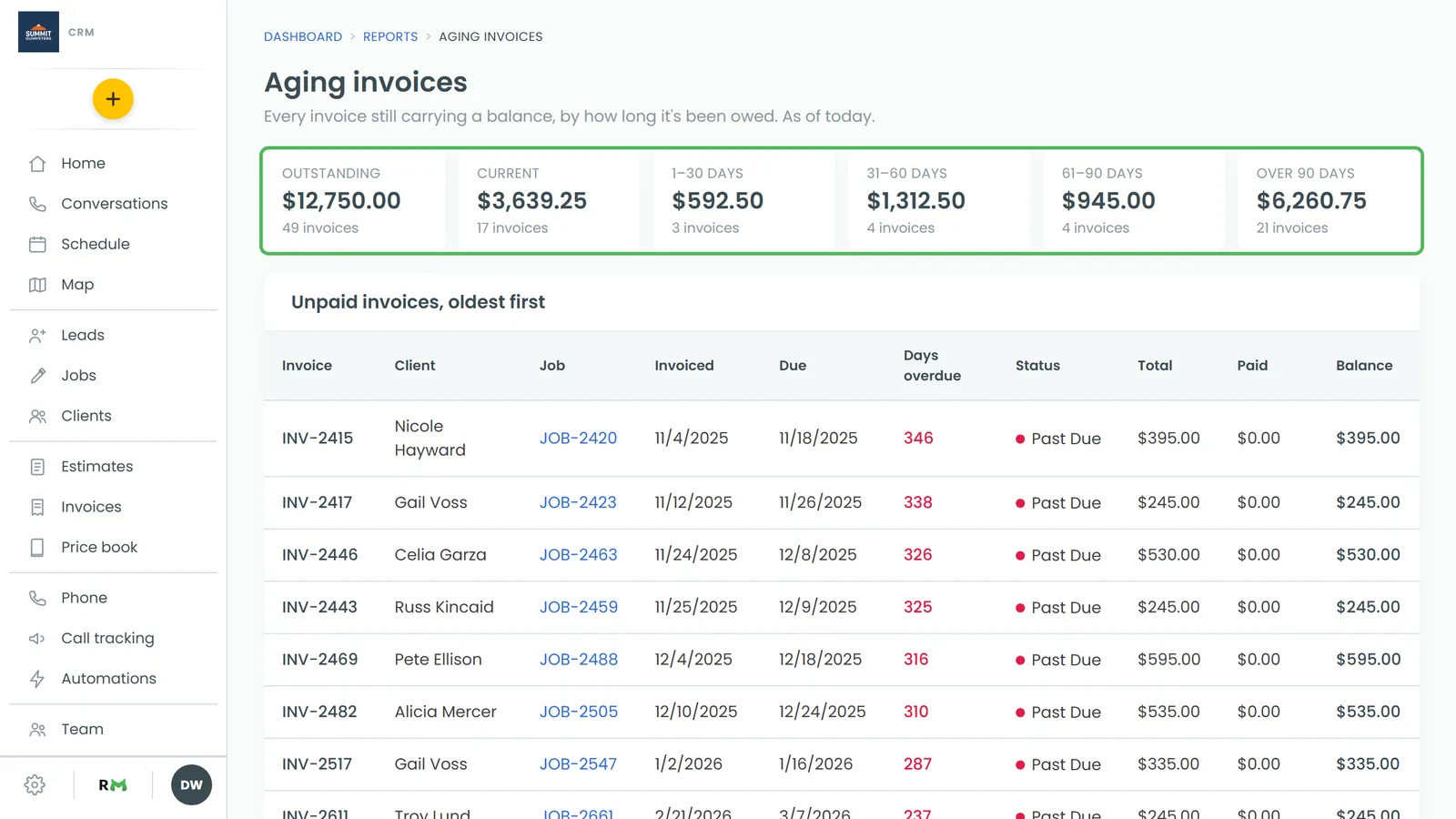
Along the top is a row of tiles:
- Outstanding is the total still owed across all of those invoices, with the number of invoices underneath.
- Current is the amount on invoices that aren't late yet. They're due today or later.
- 1–30 days is the amount on invoices up to a month past their due date.
- 31–60 days, 61–90 days and Over 90 days cover the older ones.
Each tile shows a dollar amount. When there are invoices in it, it also shows how many.
Reading the list of unpaid invoices
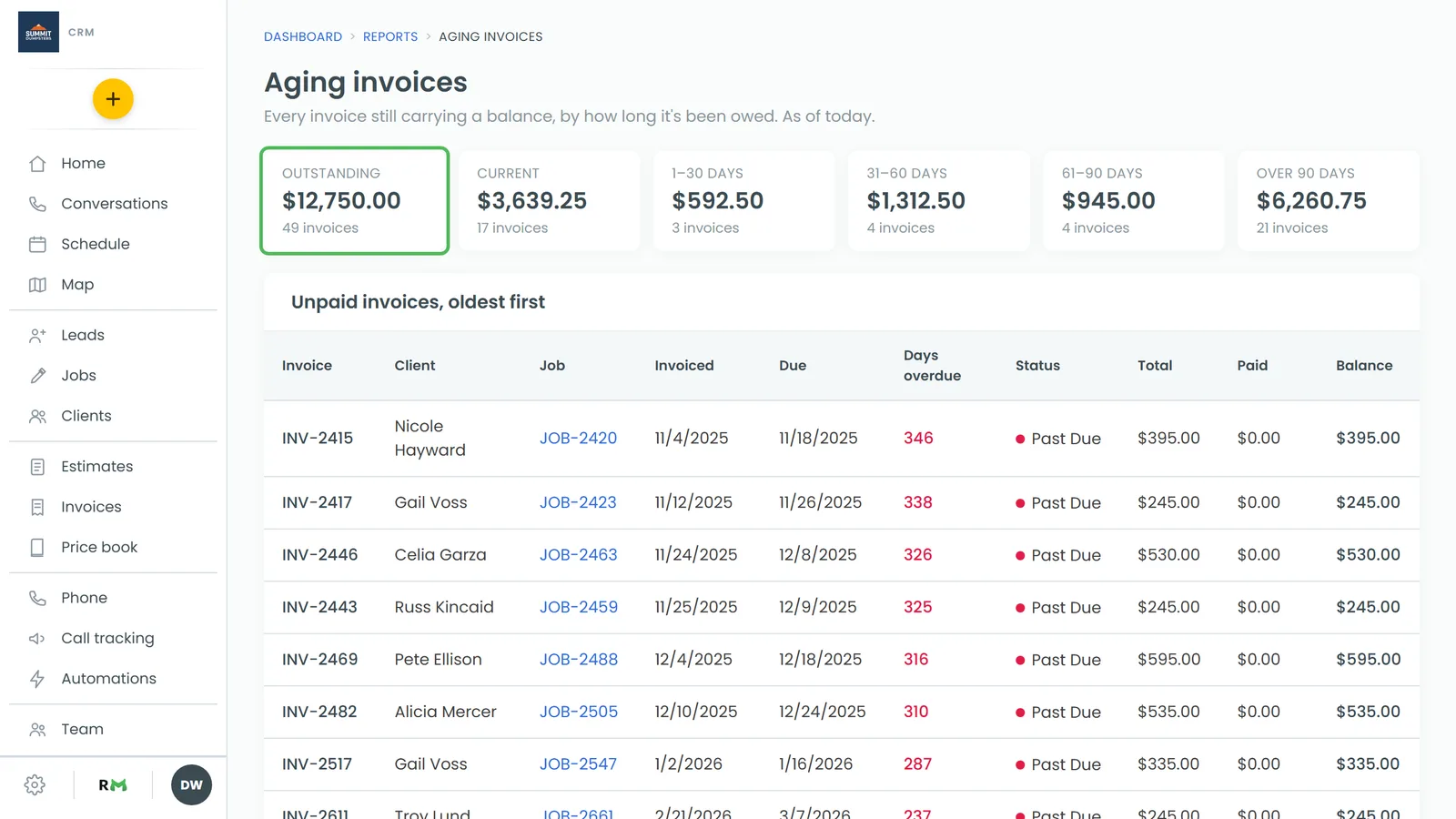
Below the tiles is Unpaid invoices, oldest first. The invoices that have waited longest are at the top. Each row shows:
- Invoice: the invoice number
- Client: who it's billed to
- Job: the job number. Click it on the web, or tap it in the app, to open the job. It shows a dash if the invoice isn't on a job.
- Invoiced: the invoice date
- Due: the due date
- Days overdue: how many days past due it is. It shows a dash if the invoice isn't late yet, and the number turns red once it's more than 30 days late.
- Status: the invoice's current status
- Total, Paid and Balance: what was billed, what's been paid so far, and what's left
On the web this is a table. In the app, each invoice is its own block with the invoice number across the top and the other figures labelled underneath it.
If nothing is owed, the list says Nothing outstanding — every invoice is paid.
Using the report to follow up
Start at the top of the list and work down. Open the job, check what's been sent, and get back in touch with the client. Once a payment brings the balance to zero, the invoice drops off the report on its own.
You can't filter this report by client or add columns to it. To see everything one client owes, open their record instead. See Tracking what a client owes.