Everything you need to rank in Google's Map Pack, organic search, and AI-powered search engines. Organized into three chapters, with practical advice you can act on today.
Where most local customers look first. These 12 tips help you show up in Google's local 3-pack.
Your GBP is the single biggest factor for map pack rankings — about 32% of the algorithm. Fill out every field: name, address, phone, hours, services, description, and attributes. An incomplete profile tells Google you're not serious about being found.
Based on industry research from Whitespark and BrightLocal
Your primary category is the strongest relevance signal Google uses to match you with searches. Don't pick something vague — pick the category that matches your main revenue driver. An HVAC company might even swap to "Heating Contractor" in winter and "AC Contractor" in summer.
Businesses listed as "open" at the time someone searches are more likely to appear in the map pack. If your hours are wrong or you're showing "temporarily closed," you're invisible for those searches. Update special hours for holidays too — it's one of the easiest wins.
NAP = Name, Address, Phone number. It needs to be identical on every directory and listing where your business appears. If your GBP says "123 Main St." and Yelp says "123 Main Street," that small inconsistency creates friction. Same formatting, everywhere.
of the map pack algorithm comes from review signals
beats 200 old reviews sitting stale
Reviews carry about 20% of the map pack algorithm. But it's not just about having 500 reviews — it's about getting new ones regularly. A business getting 5 reviews per week will typically outrank one that got 200 reviews three years ago and stopped.
When a customer writes "best plumber in Boise for emergency pipe repair," those keywords act as relevance signals for those exact searches. You can't script reviews, but you can ask: "What service did we help you with?" The keywords in review text match search queries.
“A business getting 5 reviews per week will typically outrank one that got 200 reviews three years ago and stopped.”
A single backlink from your city's newspaper is worth more than 50 links from random directories. Sponsor local events, join the Chamber of Commerce, get mentioned in local news. Focus on relevance and locality over raw numbers.
If your website doesn't mention the cities you serve, Google has less confidence showing you there. Create individual service area pages with genuinely useful, locally relevant content — not cookie-cutter templates with just the city name swapped out.
What matters most for traditional Google search rankings
GBP posts signal that your business is active and engaged. Share photos of completed projects, announce seasonal services, or post about community involvement. It doesn't need to be daily, but consistency matters.
Profiles with photos get 42% more direction requests and 35% more click-throughs. Upload professional photos of your team, location, and completed work. Geo-tag images with your business location and add new photos regularly.
Google's map pack is heavily weighted toward proximity. Businesses inside city boundaries rank better than those just outside, and closer to "city center" gets an edge. You can't fake this with a wide service area — that setting is informational, not a ranking signal.
When people call from Google, click for directions, or engage with your listing, Google sees that as a vote of confidence. Make sure your phone number is clickable, directions are accurate, and your listing is compelling enough to earn those interactions.
Your Google Business Profile is the foundation. Get it complete, keep reviews flowing consistently, and build local relevance through citations and links. That covers over 70% of the map pack algorithm.
How to climb the traditional Google results and build lasting visibility.
Before creating any page, search your target keyword and study the top 10 results. Are they how-to guides? Service pages? Comparisons? If you're trying to rank a sales page where Google shows blog posts, you're fighting the algorithm instead of working with it.
Content needs to fully satisfy the searcher's query. That doesn't mean making everything 5,000 words — it means covering the topic without fluff. Include practical examples, answer follow-up questions, and organize it so people find what they need quickly.
Your title tag is still one of the strongest on-page ranking signals. Include your keyword near the front, keep it under 60 characters, and make it click-worthy. Your meta description doesn't directly affect rank, but a good one improves click-through rate — which does.
of all clicks go to the #1 organic result
of searches now show AI Overviews
Every important page should be reachable within 2-3 clicks from your homepage. Link related pages using descriptive anchor text (not "click here"). This passes authority from your stronger pages to newer ones and helps users navigate naturally.
Links from industry publications and local news carry far more weight than random directory links. Create content worth linking to — original data, comprehensive guides, useful tools — and reach out to sites covering your industry.
Pages at position 1 are 10% more likely to pass Core Web Vitals than pages at position 9. Focus on load speed (under 2.5s), responsiveness (under 200ms), and layout stability (no content jumping). Compress images, minimize JavaScript, and use lazy loading.
Structure pages with a clear H1 (one per page with your primary keyword), followed by logical H2 and H3 subheadings. Well-structured content is more likely to appear in Google's AI Overviews and featured snippets, which show on over 55% of searches.
The three metrics Google uses to measure page experience
Largest Contentful Paint
Interaction to Next Paint
Cumulative Layout Shift
“Pages at position 1 are 10% more likely to pass Core Web Vitals than pages at position 9.”
Schema helps search engines understand your content. For local businesses, use LocalBusiness schema with your NAP and hours. For FAQs, use FAQPage schema. Structured data can earn you rich snippets — star ratings, FAQ dropdowns, and more.
Name files descriptively ("emergency-plumber-boise.jpg" not "IMG_4532.jpg"). Write alt text that describes the image with relevant keywords. Compress to WebP, use responsive sizing, and lazy-load images below the fold.
Each pillar reinforces the others to build lasting search visibility
Specific searches like "best review management software for dentists" are easier to rank for, have clearer intent, and convert better. Start with long-tail wins, and as you build authority, the broader terms follow naturally.
Google values freshness. Regularly audit your content and update it with new data, current stats, and revised recommendations. A visible "Last Updated" date that reflects genuine updates signals relevance. Don't just publish and forget.
Over 60% of Google searches happen on mobile. If your site isn't fast, readable, and easy to navigate on a phone, you're losing rankings and customers. Google uses mobile-first indexing — the mobile version determines your rank.
Start with search intent and solid content, then layer in technical optimization. Organic SEO takes longer than local, but the compounding effect of good content and backlinks creates durable rankings.
How to get cited by ChatGPT, Perplexity, and Google AI Overviews.
AI tools like ChatGPT and Google AI Overviews use Retrieval-Augmented Generation (RAG). They search the web, pull passages from multiple sources, synthesize them, and cite what they used. You don't need to be #1 on Google — you need to be a trusted source with clear, extractable information.
Retrieval-Augmented Generation in five steps
Put your key answer at the top of each section, then add supporting detail below. Use clear headings, numbered lists, and concise paragraphs. Format your content as if you're making it easy for someone to pull a clean, accurate quote — because that's exactly what AI does.
AI models don't rely on a single page to mention you. They reference your brand from across the web — your site, publications, YouTube, Reddit, and review platforms. Get your brand mentioned accurately on industry sites, comparison articles, and forums where your audience is.
of Google searches now show AI Overviews
FAQs are one of the content types most frequently cited by AI systems. Write genuine questions people actually ask and answer them clearly. Use FAQ schema markup. Target conversational queries that match how people talk to AI.
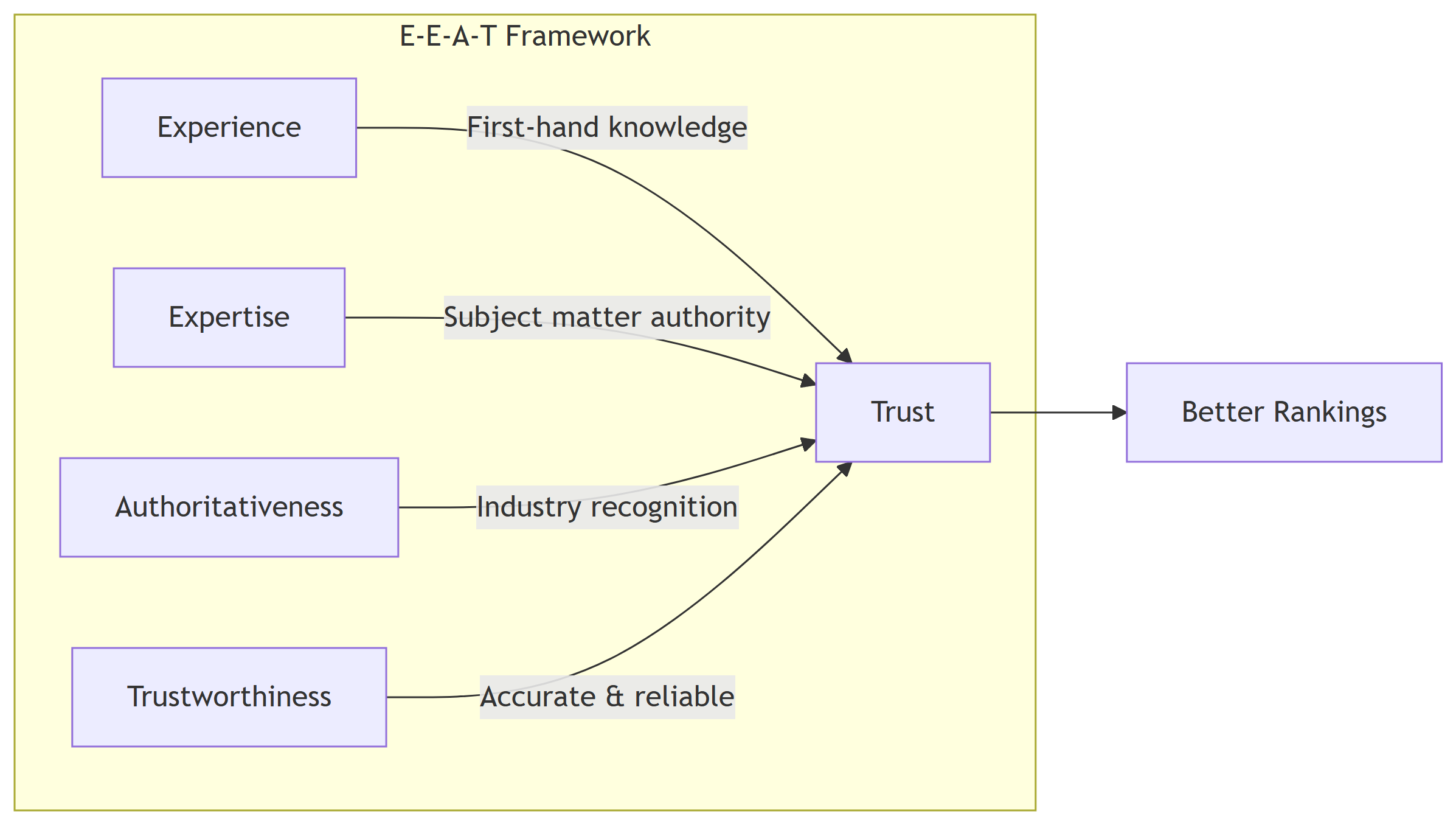
AI systems heavily weight authoritative sources. Include author bios with credentials, cite original data, and link to authoritative sources. Content that reads like it was written by someone who actually does this work gets cited more than generic marketing copy.
AI systems like ChatGPT and Perplexity heavily reference Reddit and community discussions. Don't spam or self-promote — provide genuinely helpful answers where your audience asks questions. When your brand comes up naturally, AI models notice.
When someone asks ChatGPT "what's the best review management software," it pulls from comparison articles. Create honest, detailed comparison content in your space. Make sure your brand appears accurately in third-party roundups too.
“Every source agrees: there is no AI search optimization without solid traditional SEO. AI Overviews cite pages that rank in the top 10.”
Schema markup is the language AI systems understand natively. Implement Organization, LocalBusiness, Service, FAQ, and Review schema across your site. The more machine-readable your content, the easier it is for AI to extract and cite it.
AI systems gain confidence in citing a brand that demonstrates deep expertise across multiple pages. Build a pillar page covering a topic comprehensively, plus supporting pages on subtopics. This interconnected structure signals you're an authority.
ChatGPT pulls from Wikipedia, major news outlets, and industry publications. Perplexity leans toward expert review sites. If your brand is mentioned in recognized publications, that carries real weight. Pursue digital PR and contribute expert quotes.
AI systems prioritize fresh information. Content with current statistics and a visible "last updated" date performs better. Revisit your most important pages quarterly, update facts, and add new sections addressing emerging questions.
Every source agrees: there is no AI search optimization without solid traditional SEO. AI Overviews cite pages that rank in the top 10. ChatGPT queries traditional search indexes. If your pages aren't crawlable, fast, and well-structured, no amount of AI optimization will help.
AI search is built on traditional SEO. Make your content structured, quotable, and authoritative. Build your brand presence across multiple sources so AI models encounter you everywhere they look.
Straight answers about SEO for local businesses.
For local SEO and map pack rankings, you can sometimes see movement within a few weeks — especially with Google Business Profile optimizations. Organic rankings typically take 3-6 months of consistent effort before you see meaningful results. AI search visibility is newer, but most practitioners report noticeable improvements within 2-4 months of focused work.
If you're a local service business, start with the Map Pack. It's where most local customers look first, and you can see results faster. Once your GBP is dialed in and reviews are flowing, layer in organic SEO. The two reinforce each other — a strong website helps your map pack rankings, and map pack visibility drives traffic to your site.
Yes, but don't panic. AI search (ChatGPT, Perplexity, Google AI Overviews) is growing fast, and the businesses that show up there now will have a significant advantage. The good news: most AI search optimization is just doing traditional SEO really well, plus making your content easy for AI to understand and cite.
At least once a week is a good target. Share photos of recent projects, announce seasonal services, post customer testimonials (with permission), or highlight community involvement. Consistency matters more than frequency — posting once a week every week beats posting daily for a month and then going quiet.
For the Map Pack, reviews are significantly more important (20% vs. 8% of the algorithm). For organic rankings, backlinks carry much more weight (24% vs. 6%). Ideally, you want both working for you. Start with reviews since they're easier to influence directly, then build your backlink strategy over time.
You can absolutely handle the basics yourself — optimizing your GBP, asking for reviews, keeping your website content fresh, and building local citations. But technical SEO, backlink strategy, and schema markup often benefit from professional help. Start with what you can do today and bring in help for the technical stuff when you're ready.
Review Monster helps local businesses rank higher with automated reviews, optimized websites, and local SEO — all working together.